Gleb Lobovsky.

Product / UX / UI Designer

Hummingbird
0→1 Complex system B2B

Hummingbird

Desktop SaaS and HaaS product.

0→1 B2C iOS Android

BlueEye

Smart home B2C mobile IoT app.

0→1 iOS Android SaaS

Cherry

SaaS mobile B2B app for installers.

1→2 IoT TouchGFX Tablet

Keypad K70

Smart tablet for home environment IoT.

Design on screen,
paint on the table.

Product design / YouTube / Warhammer

About me. I design B2B and consumer products across SaaS, HaaS and mobile, turning complex, high-stakes systems into interfaces people can actually read — and increasingly AI-driven products, where the hard part is making a model's output trustworthy. I like scalable design systems and shipping alongside engineers. Outside work I run a YouTube channel about product design and paint Warhammer miniatures.

{{ track.n }}

{{ track.title }}

{{ track.body }}

Gemini Claude LottieFiles Figma Adobe Blender Gemini Claude LottieFiles Figma Adobe Blender
Personal · Miniature painting Plates 01 — 05

Warhammer.

Two armies painted by hand — the pale carapace of a hive fleet and the rusted rot of the Death Guard. Shot one model at a time, on black.

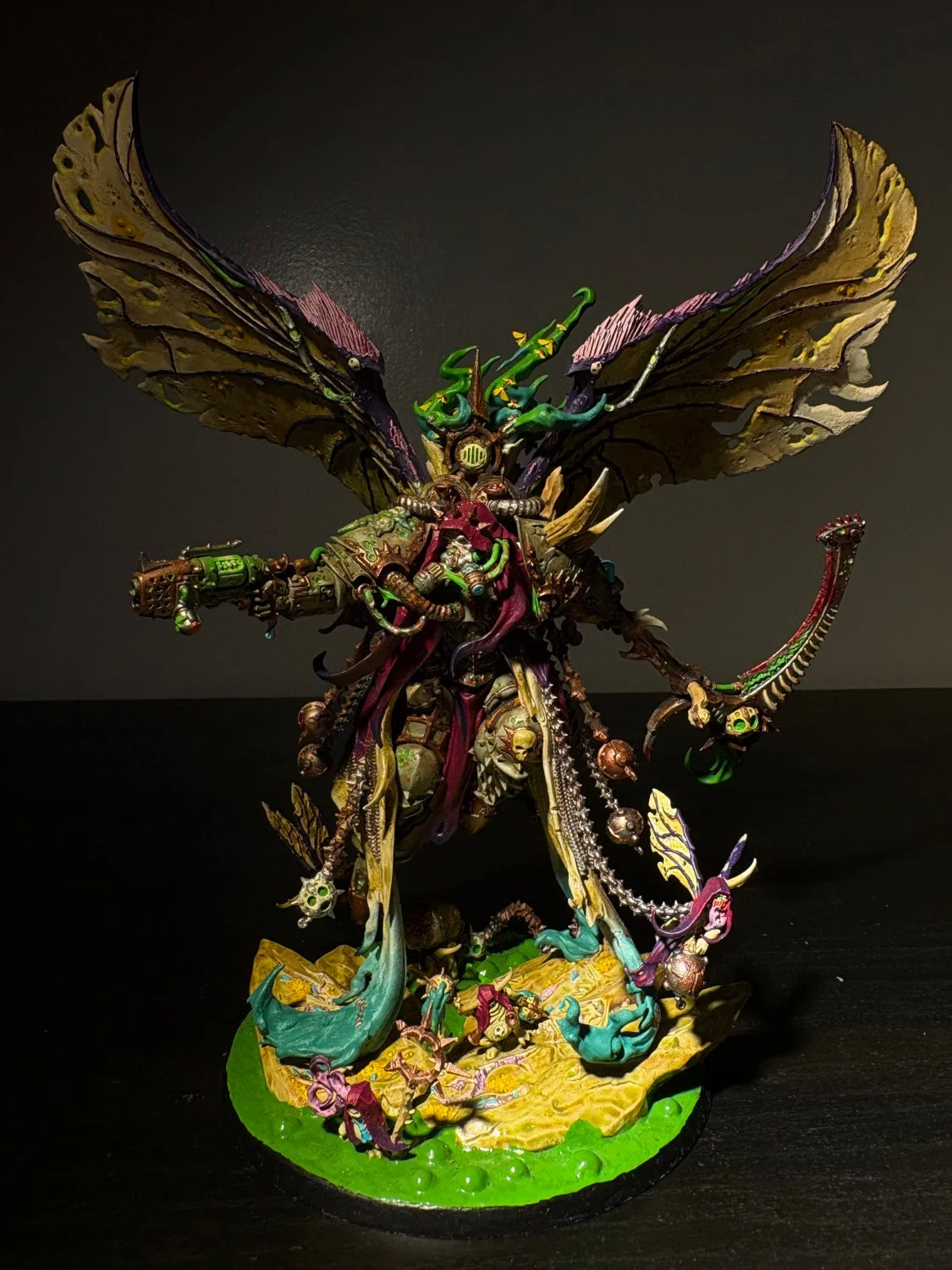
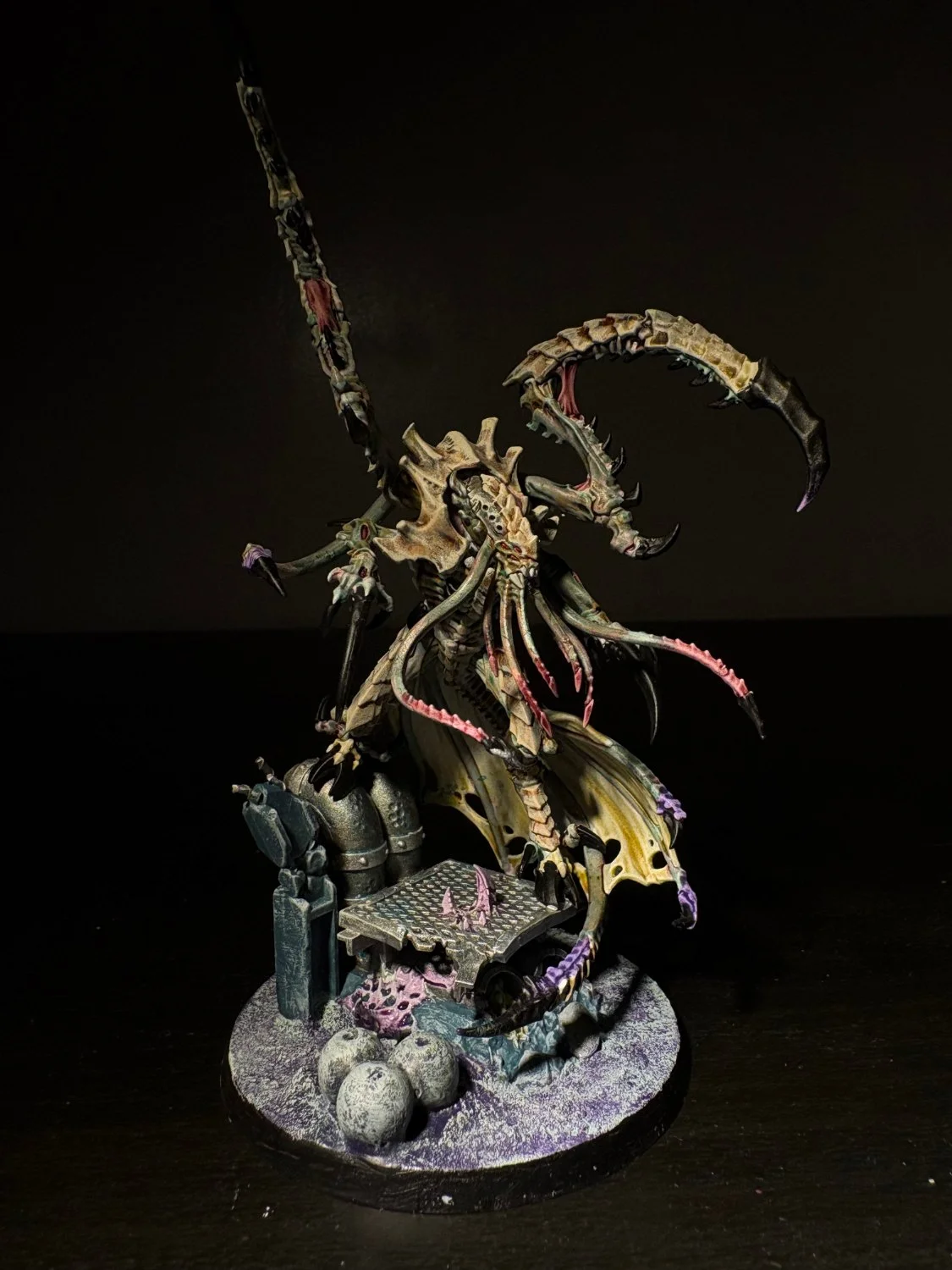
Winged warlord with tattered wings and a long scythe
01The centrepiece — wings glazed thin enough to read as membrane, on a base that took as long as the model.
01 Hive fleet Bone · violet · teal

Bone, chitin, and a cold violet ground.

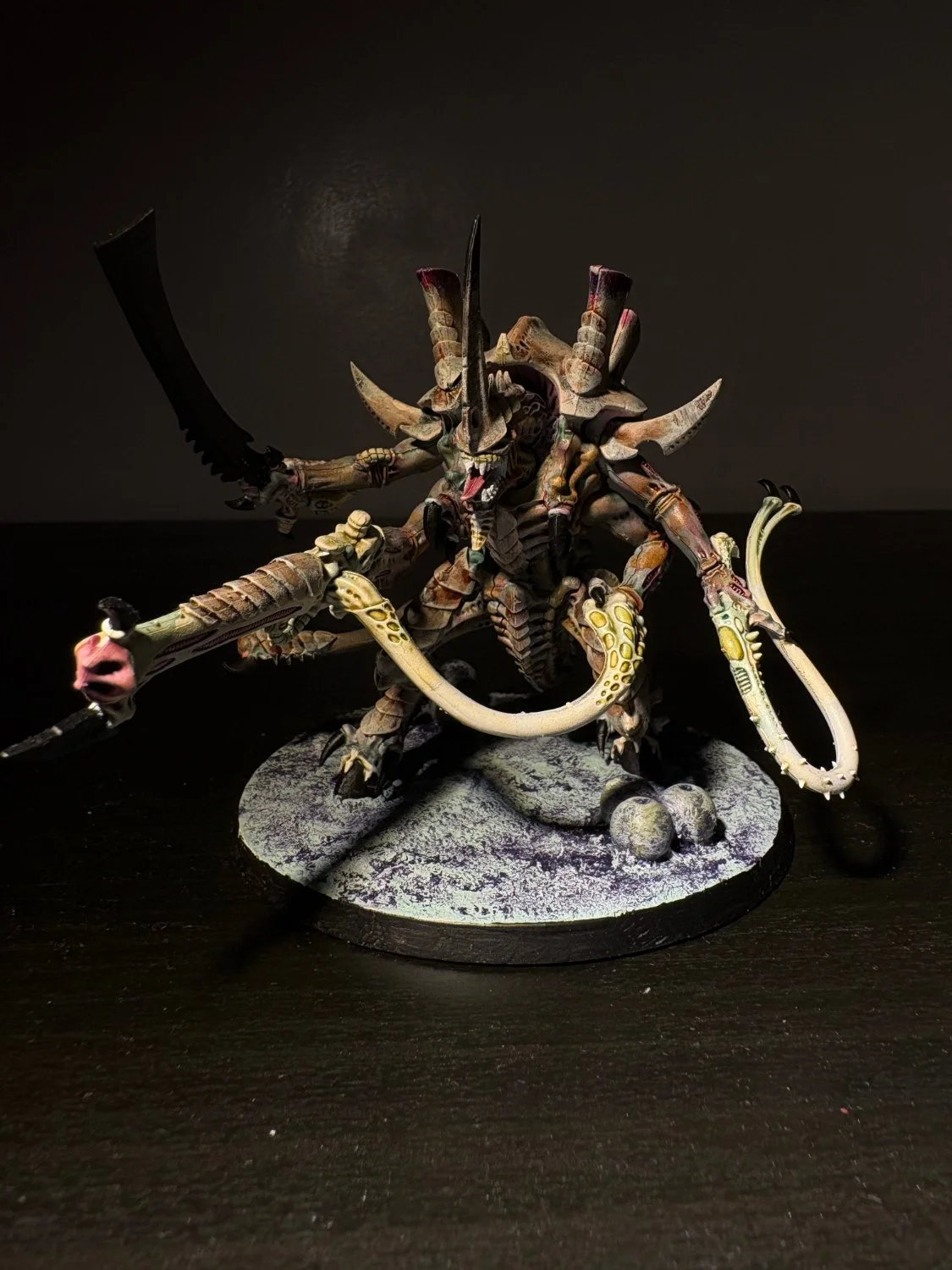
Four-armed bladed leader creature
02The big one — four blades and a lot of blending in the joints.
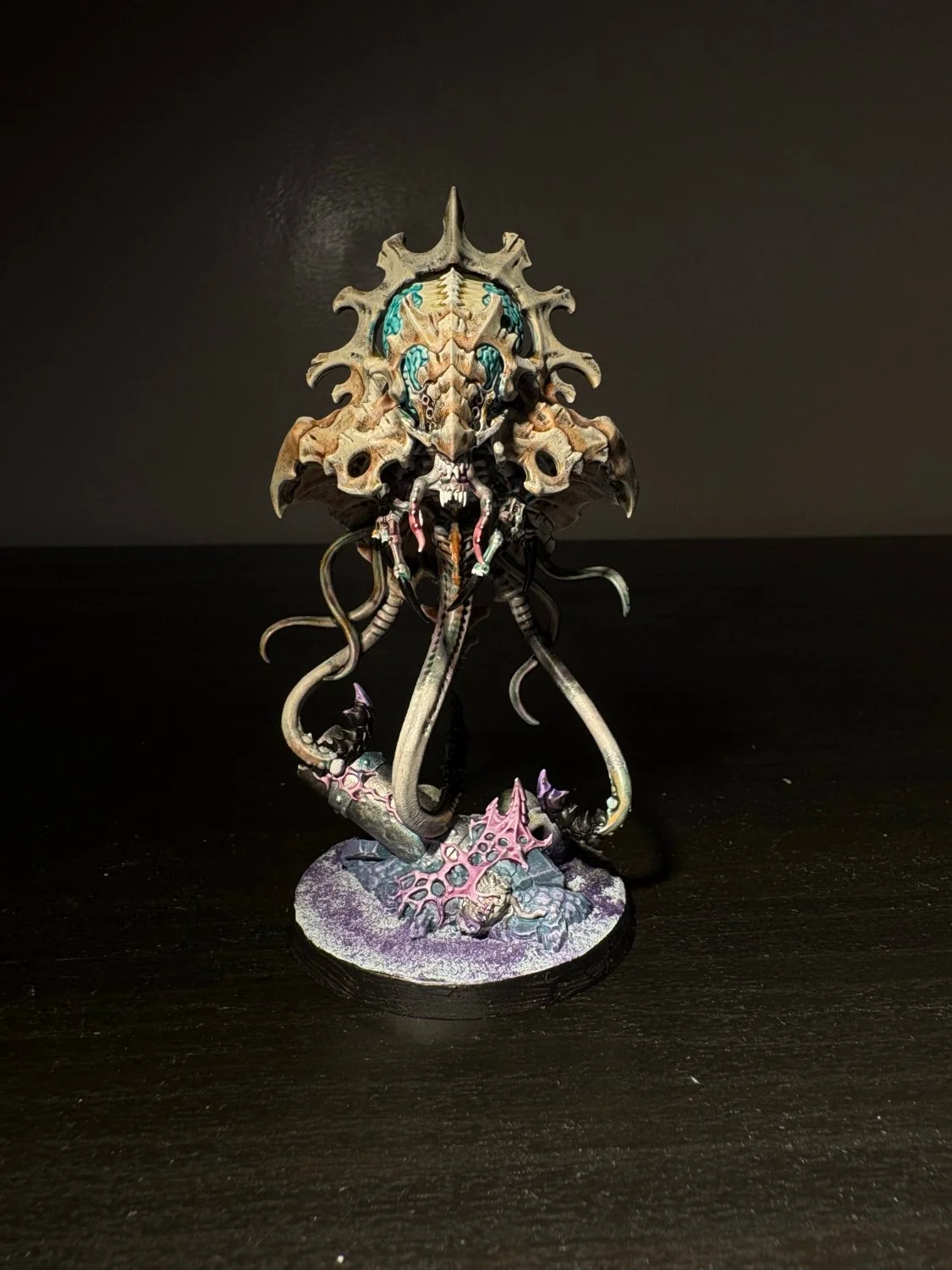
Psychic beast with teal brain and bone carapace
03Psychic node — teal brain, bone shell, nothing else allowed on it.

Every creature in the fleet uses the same three values of bone and the same violet base. Only the accent moves — teal here, pink there — so a shelf of them still reads as one organism.

Winged creature on ruined plating, three-quarter view
04Winged variant, three-quarter — wings thinned until light comes through.
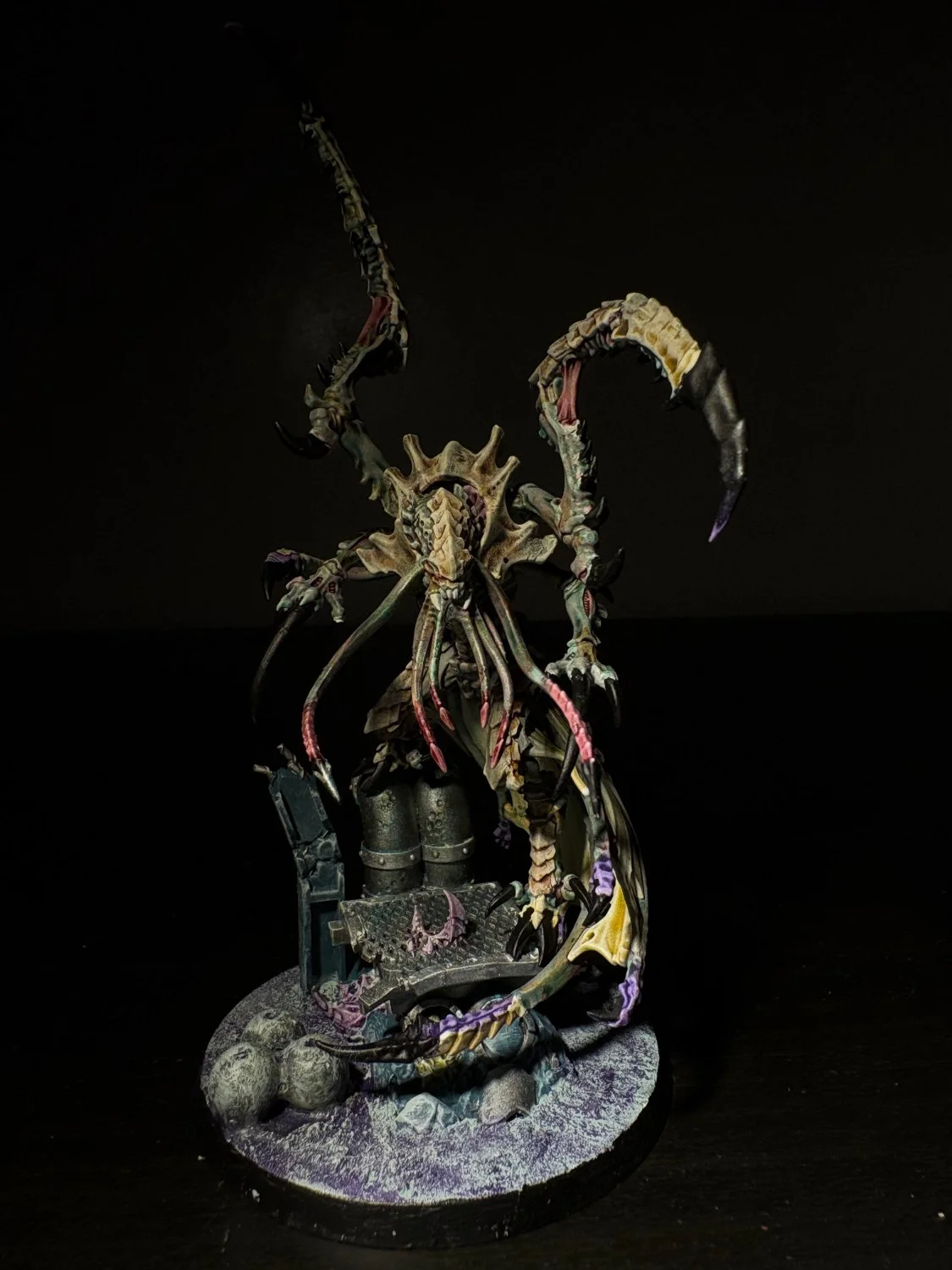
The same winged creature seen straight on
05Same model, straight on — the silhouette is the whole trick.
Black background, one light. Everything the paint does has nowhere to hide.
02 Basing Grit · eggs · torn plating
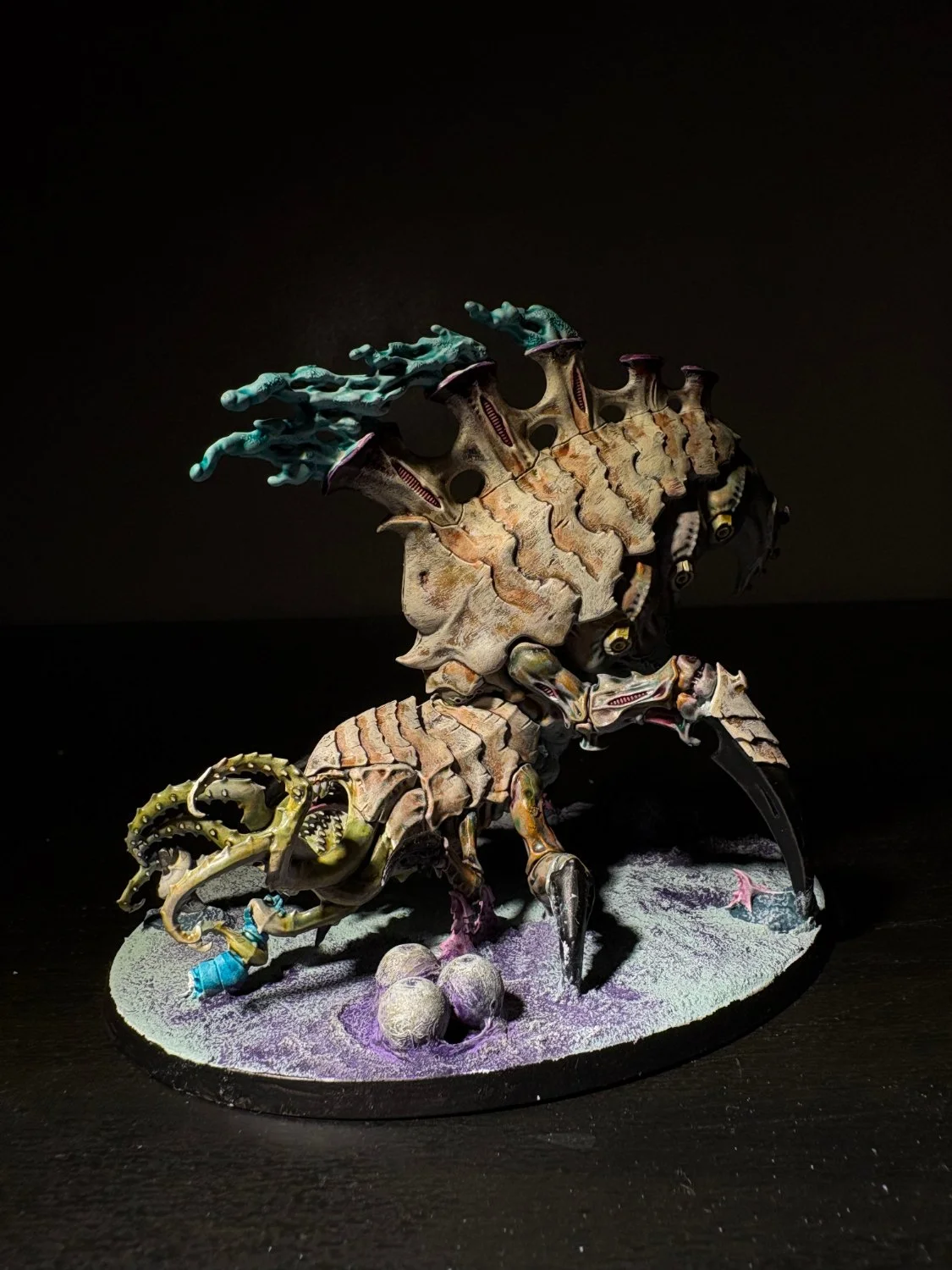
Heavy beast with teal flame growth standing over spent eggs
06Heavy gunner — spent eggs in the grit, teal flame the only saturated thing on it.

The bases are half the picture: frozen violet grit, spent eggs, torn plating. They tell you where the fleet has already been without adding a single word.

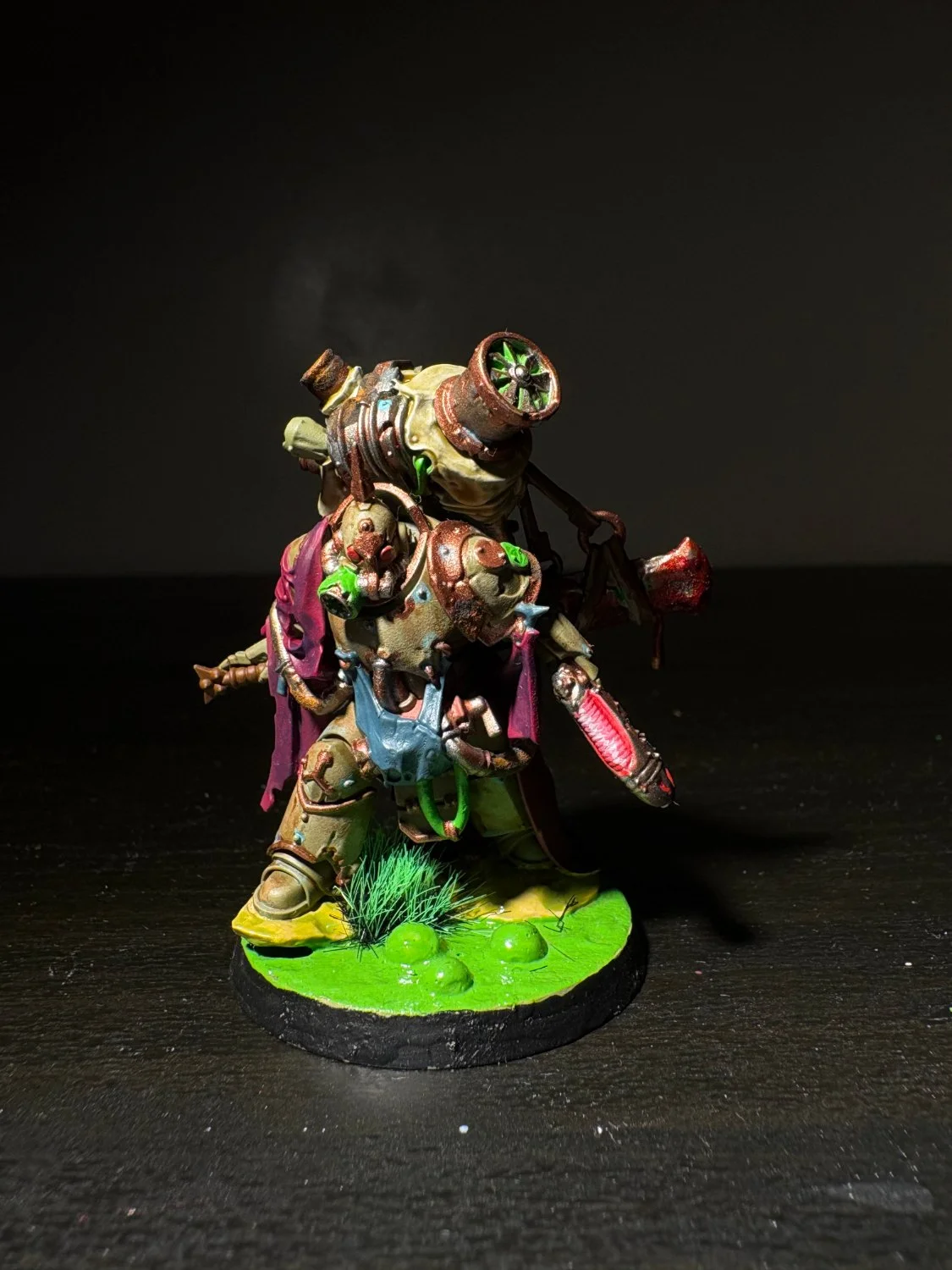
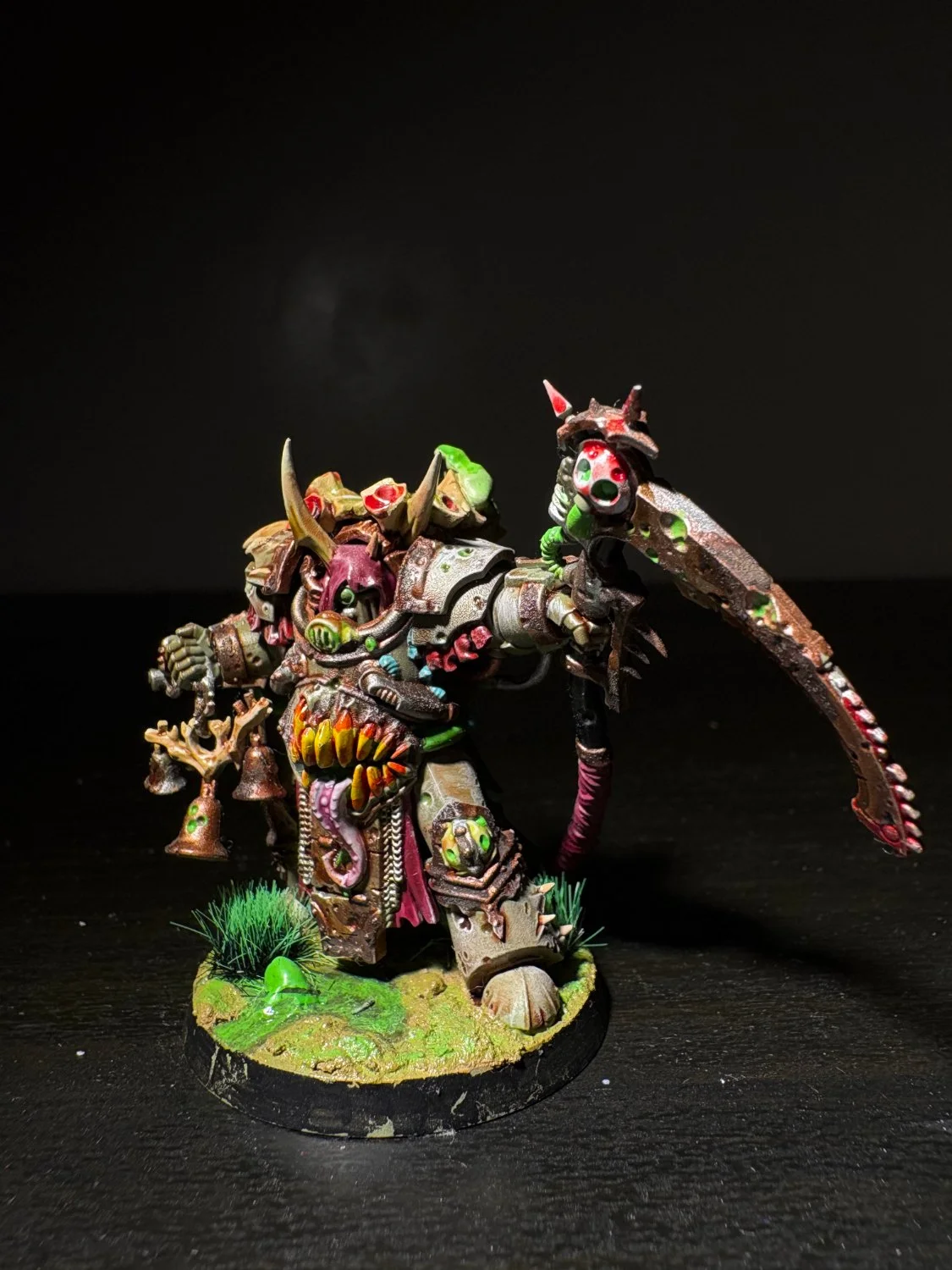
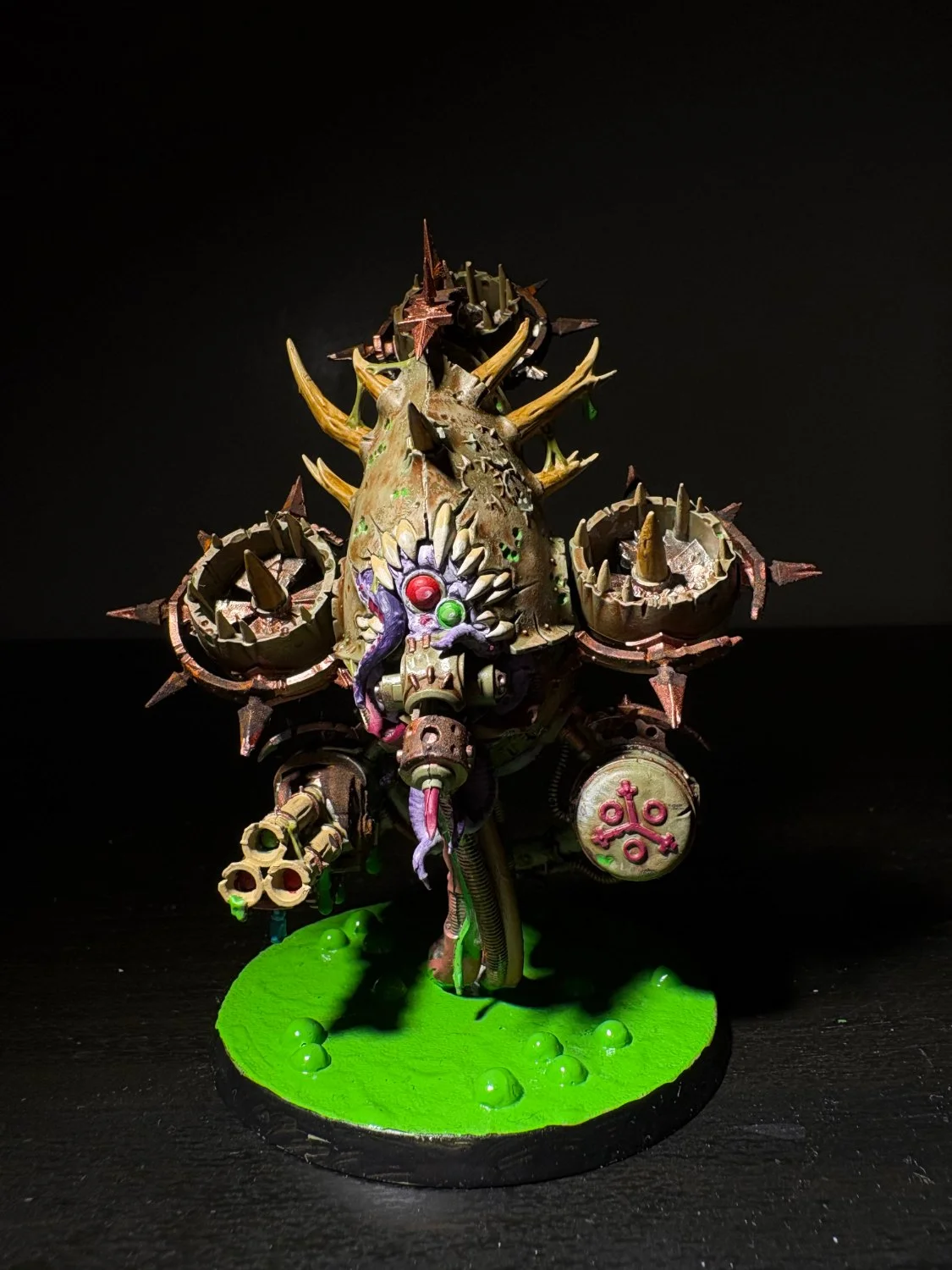
03 Death Guard Rust · copper · acid

Rust, rot, and a base that glows.

The opposite discipline: dirty, oxidised armour against a poisonous acid-green ground, so the eye is pulled down to the feet and back up through the copper.

Armoured trooper in rusted plate on an acid-green base
07Line trooper — bone-toned plate, copper rot, acid at the feet.
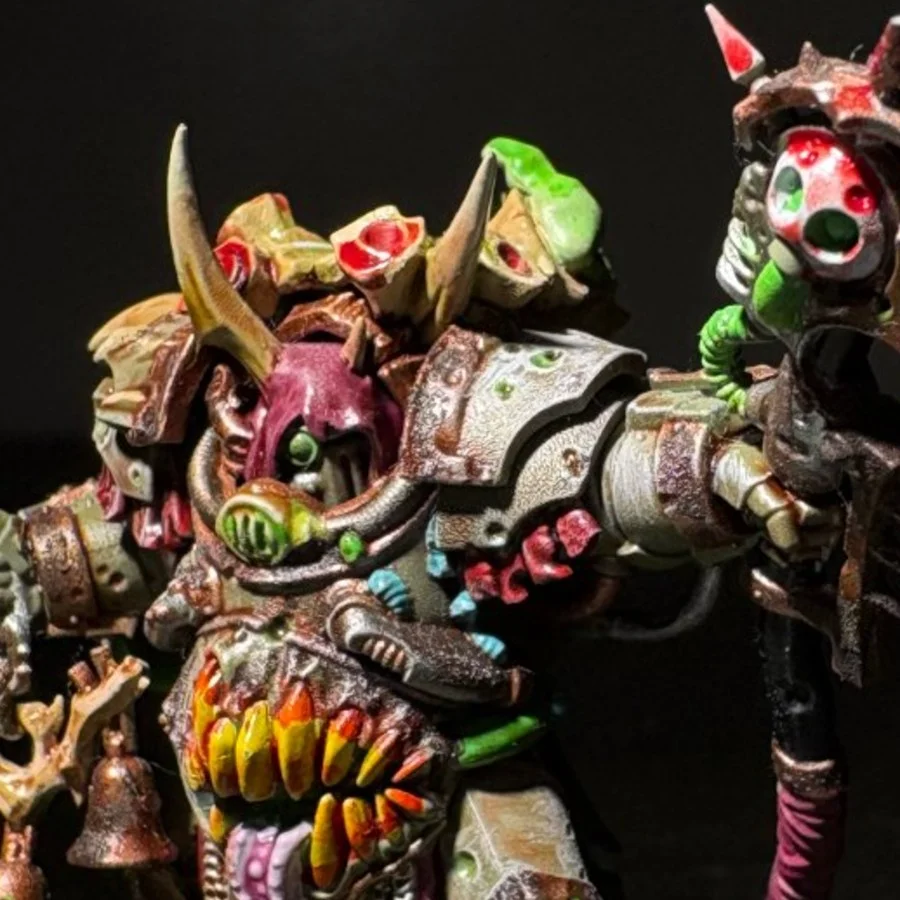
Champion with scythe and hanging bells
08Champion — scythe, bells, and the one model allowed red.
Spiked walker machine with cannon arms over green slime
09The walker — copper edges, and a base doing all the shouting.
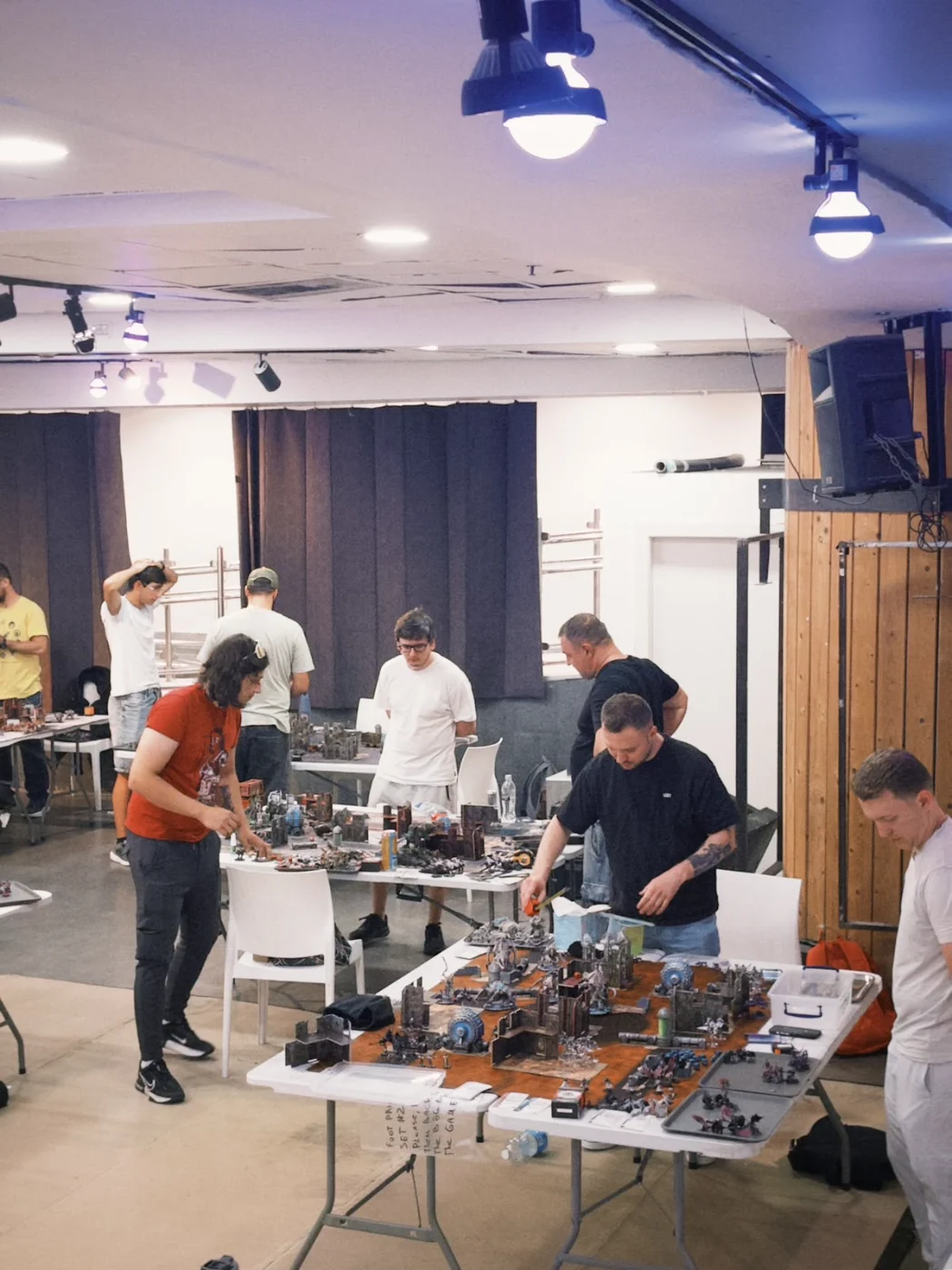
04 Played Tournament tables

And then they get used.

Tournament tables mid-game
10Tournament day — the whole point of painting them.
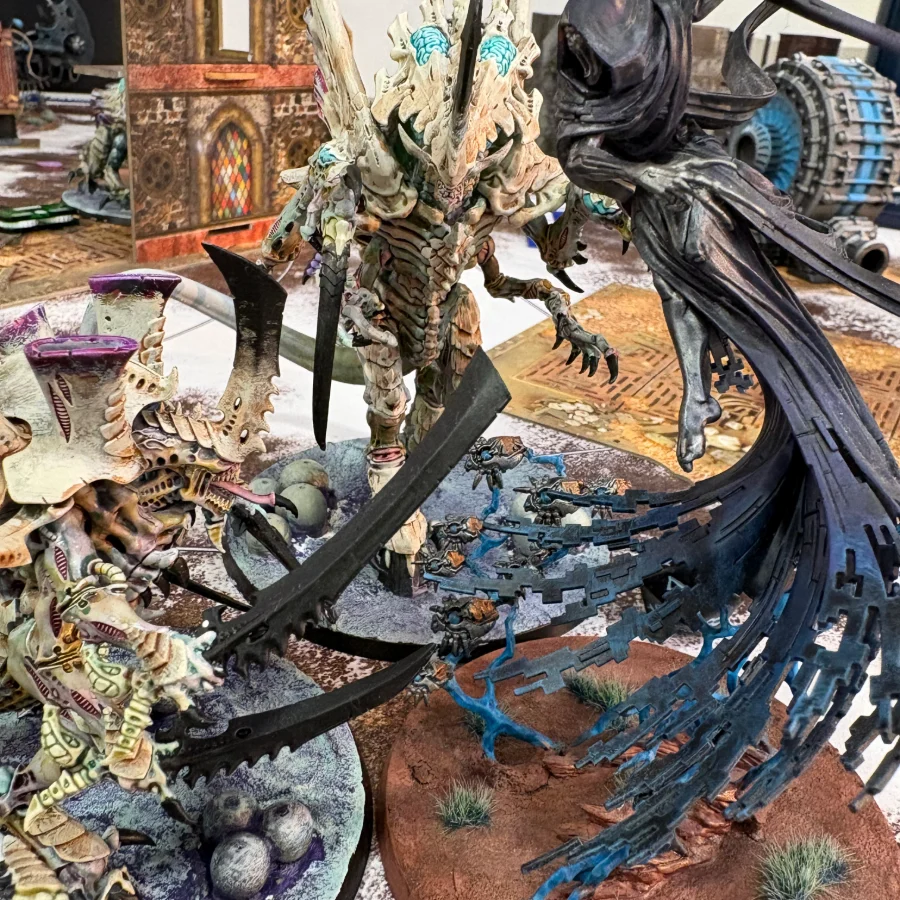
Hive fleet facing a reaper across the board
11Mid-game standoff — bone against a black cloak.
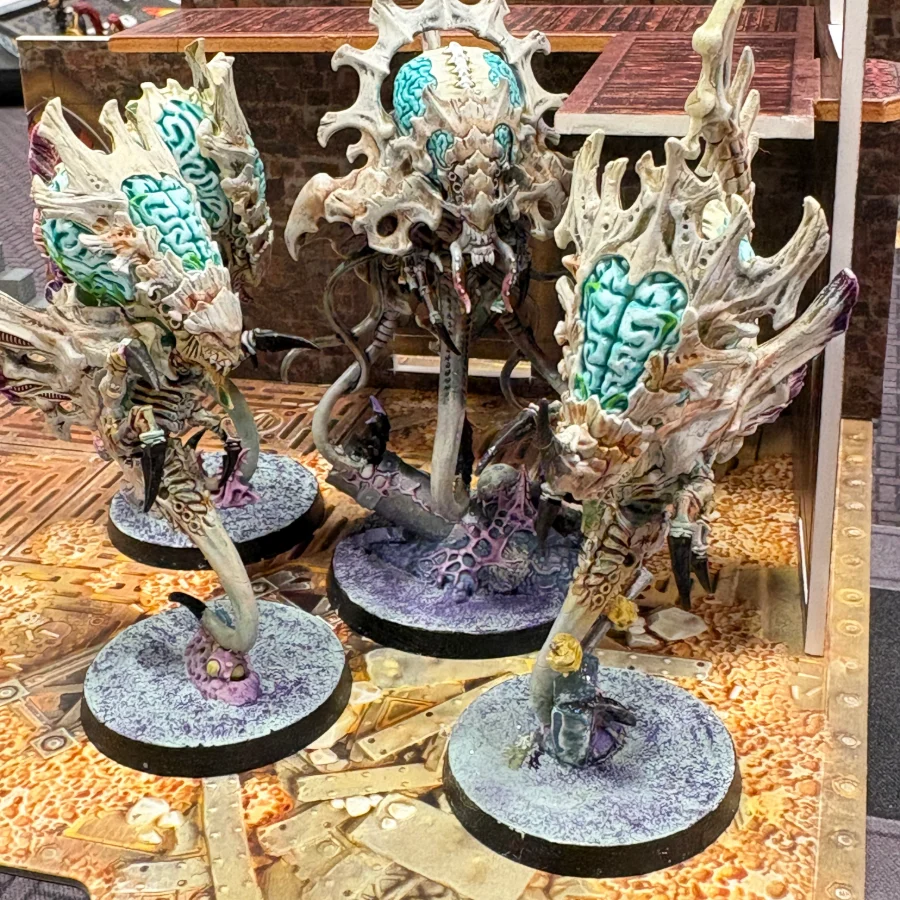
Squad of psychic beasts deployed on terrain
12The squad deployed — teal brains reading across the whole unit.
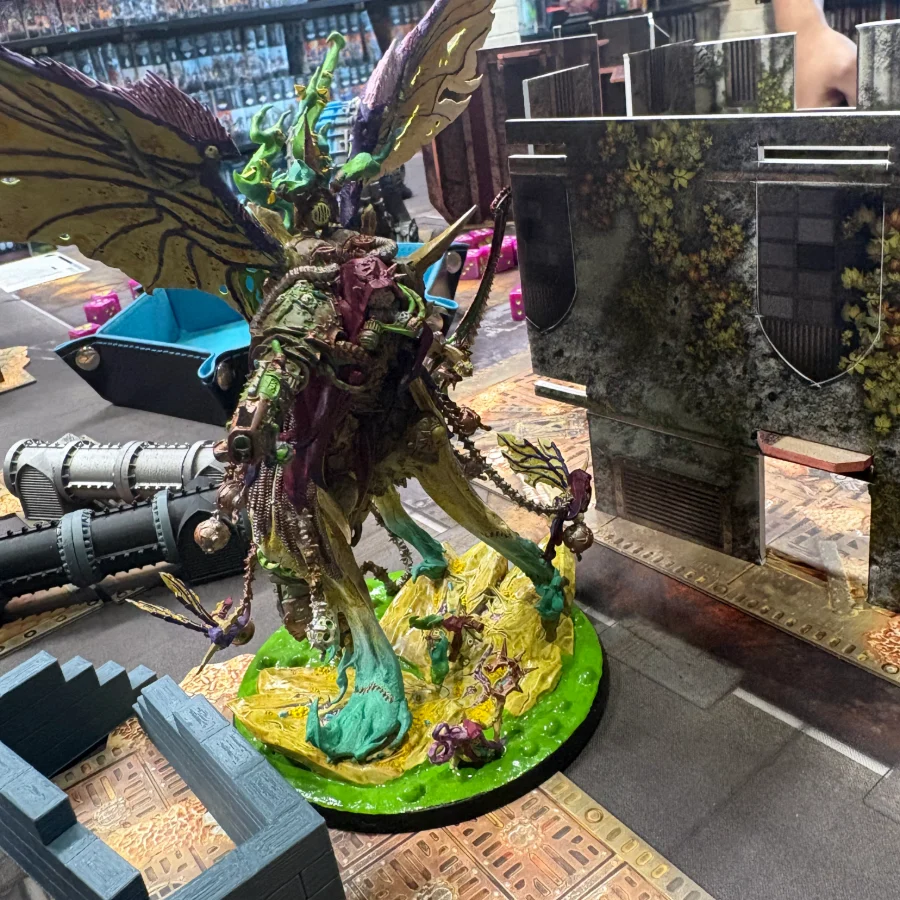
Winged daemon primarch on the table
13The primarch on the table, acid base and all.
05 Details Two square millimetres

The model is won at 2 mm.

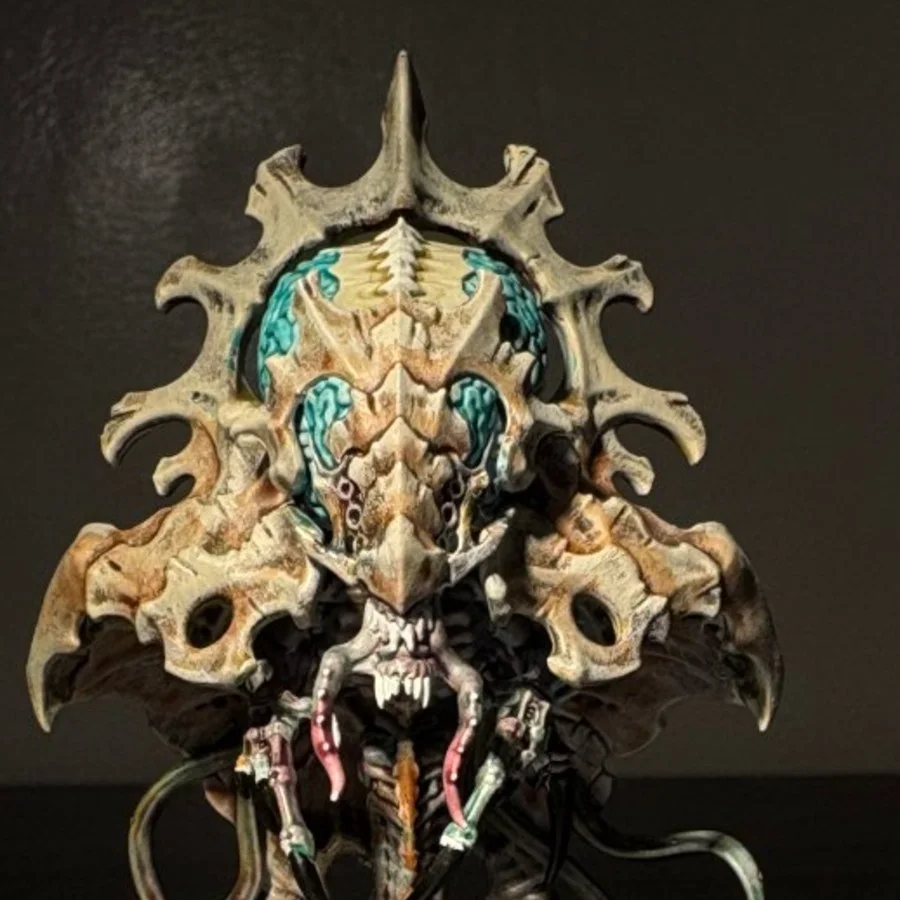
Close-up of a bone head crest and teal brain
14The crest — three bone values and one teal glaze, nothing more.
Close-up of a champion's face, teeth and trophies
15Teeth and trophies — an hour of work you see for one second.
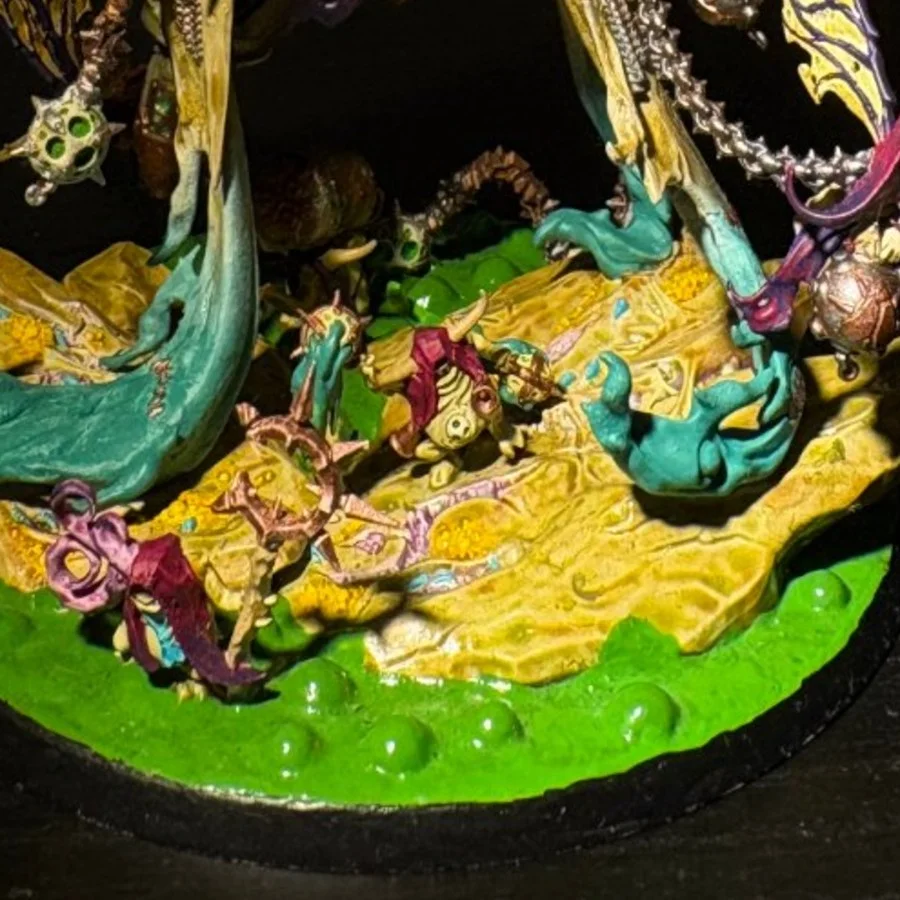
Close-up of a base diorama with fallen figures in acid
16The base up close — a whole small scene under one pair of feet.

Eyes, edges and the two square millimetres of freehand are what people actually remember. Everything before them is preparation.

Nine models, two schemes, one lamp.

Welcome to my little site!

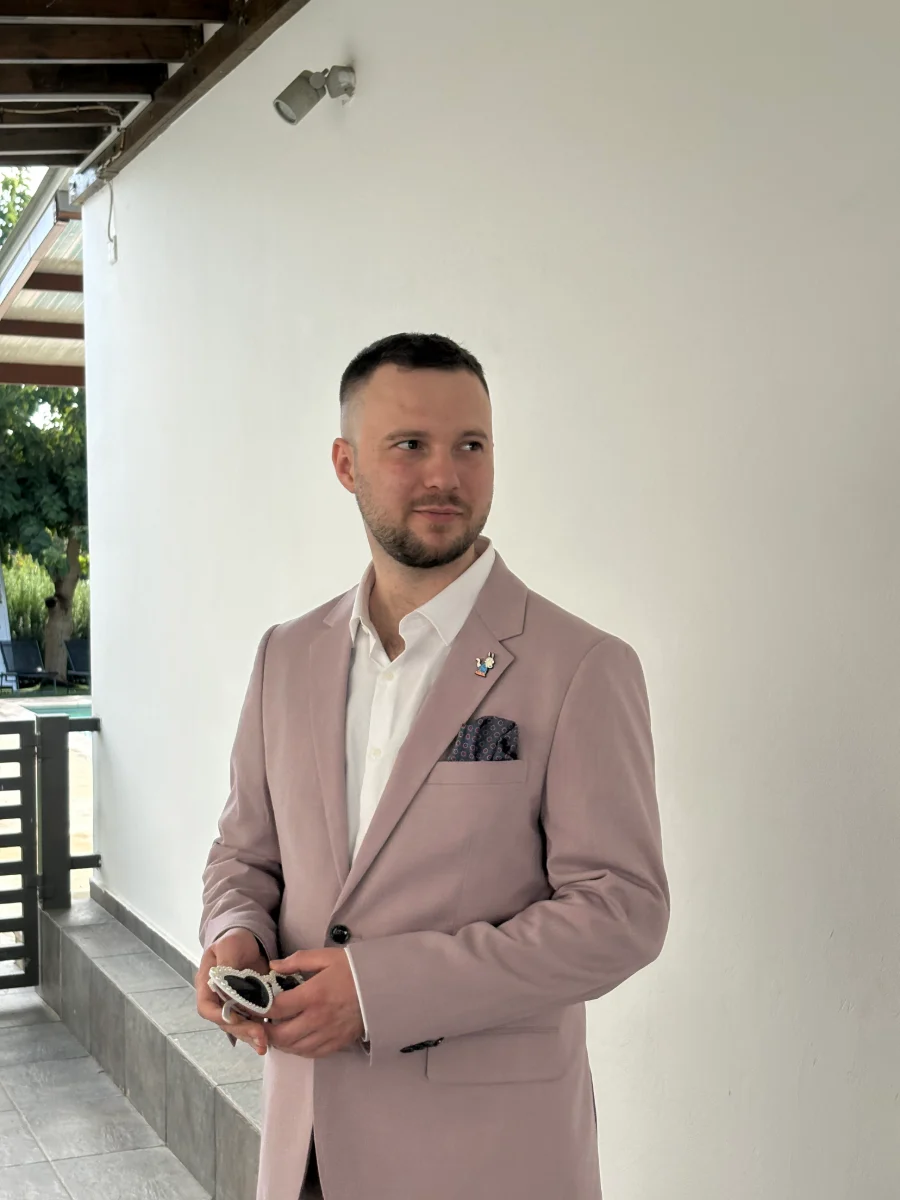
I’m Gleb, a product designer working on security and smart-home systems — installer tools, keypads, mobile apps and the hardware they talk to. I like problems where the software has to match something physical in someone’s hands.

Most of my work is the unglamorous part of design: systems, states, edge cases. Deciding what a screen does when the panel is offline, the code is wrong, or the technician is standing on a ladder in the rain.

I also build and render the hardware, prototype in code, and keep a running library of flows so design and engineering argue less.

What I care about is confidence — an interface should make you certain you did the right thing, especially when the stakes are your front door.

Away from the screen: cooking (badly measured, well eaten), painting Warhammer miniatures, and a small dog who supervises both.

Say hello if you want to talk design, hardware or paint:

lobovsky.gleb@gmail.com

Gleb

Cooking is the other craft

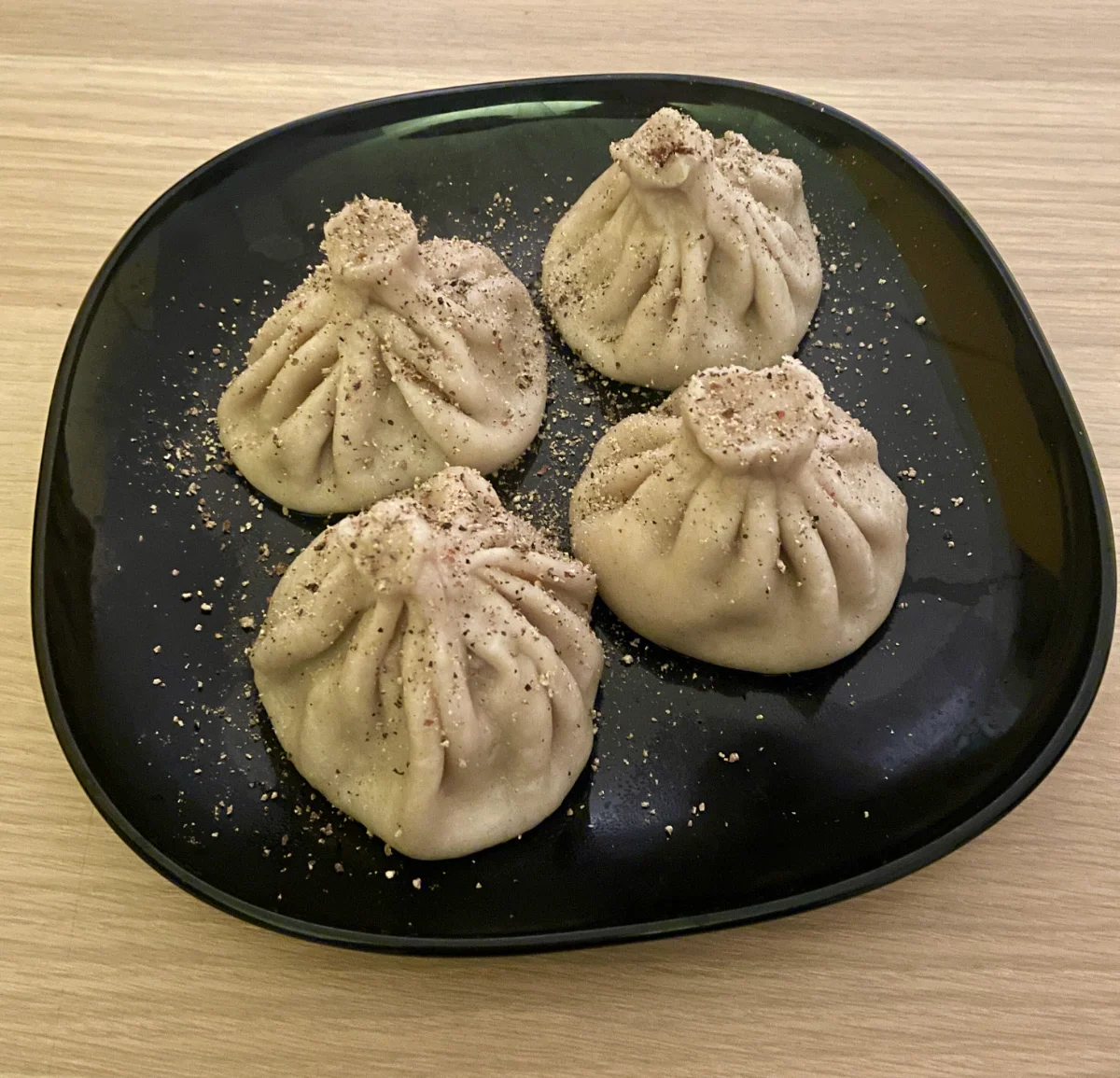
Khinkali
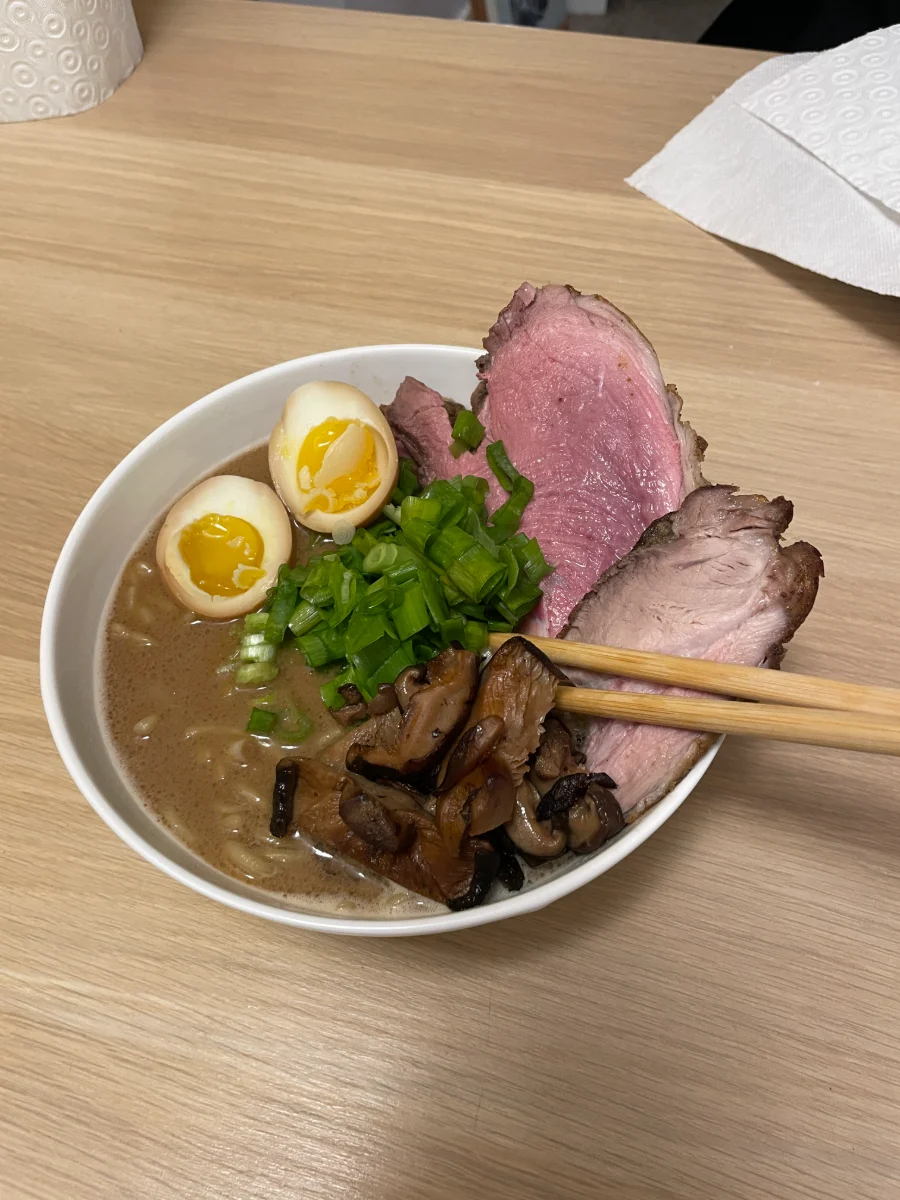
Tonkotsu ramen
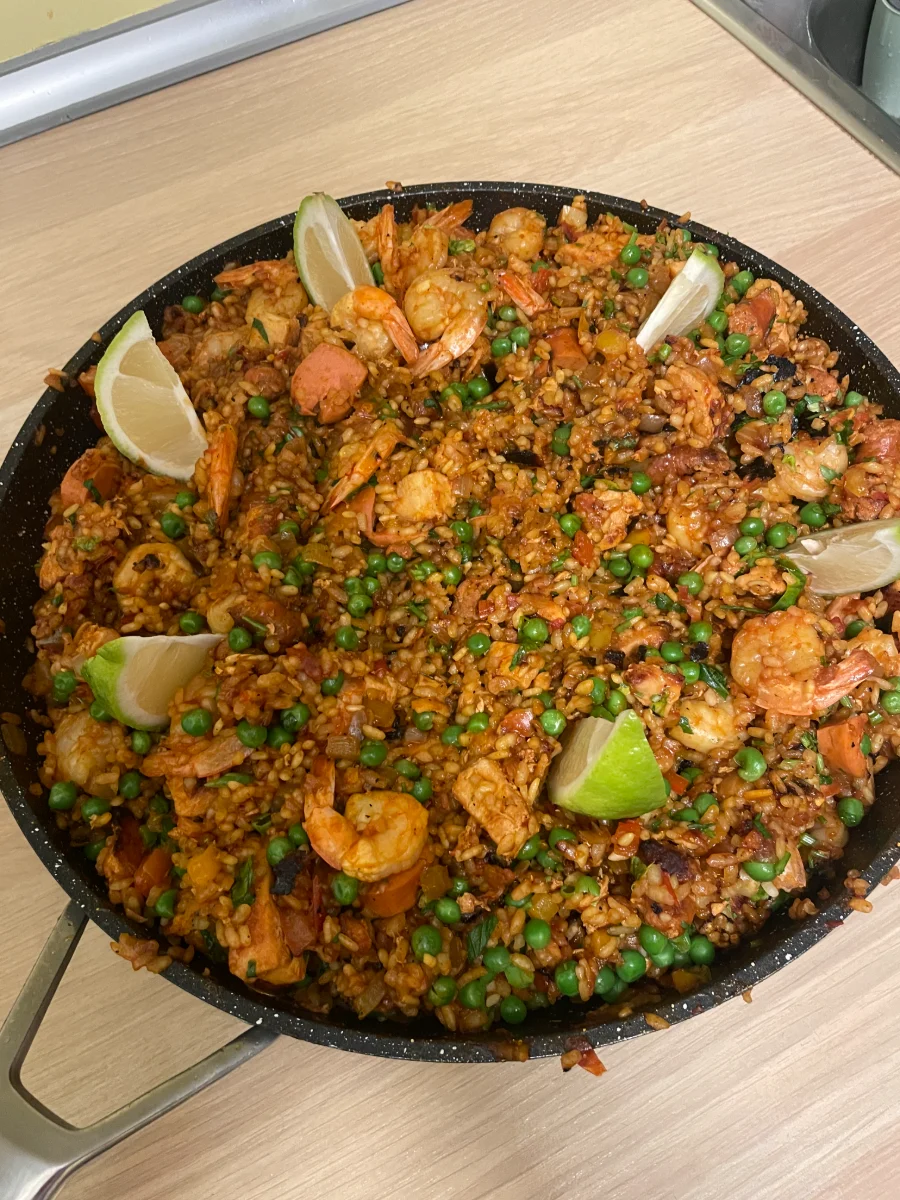
Paella

Same instinct as the day job: a few components, done properly, in the right order. These three come back the most.

Khinkali Pepper on top, broth stays inside
Tonkotsu ramen Twelve-hour broth, jammy egg, duck
Paella One pan, no stirring, socarrat or nothing

Off the clock

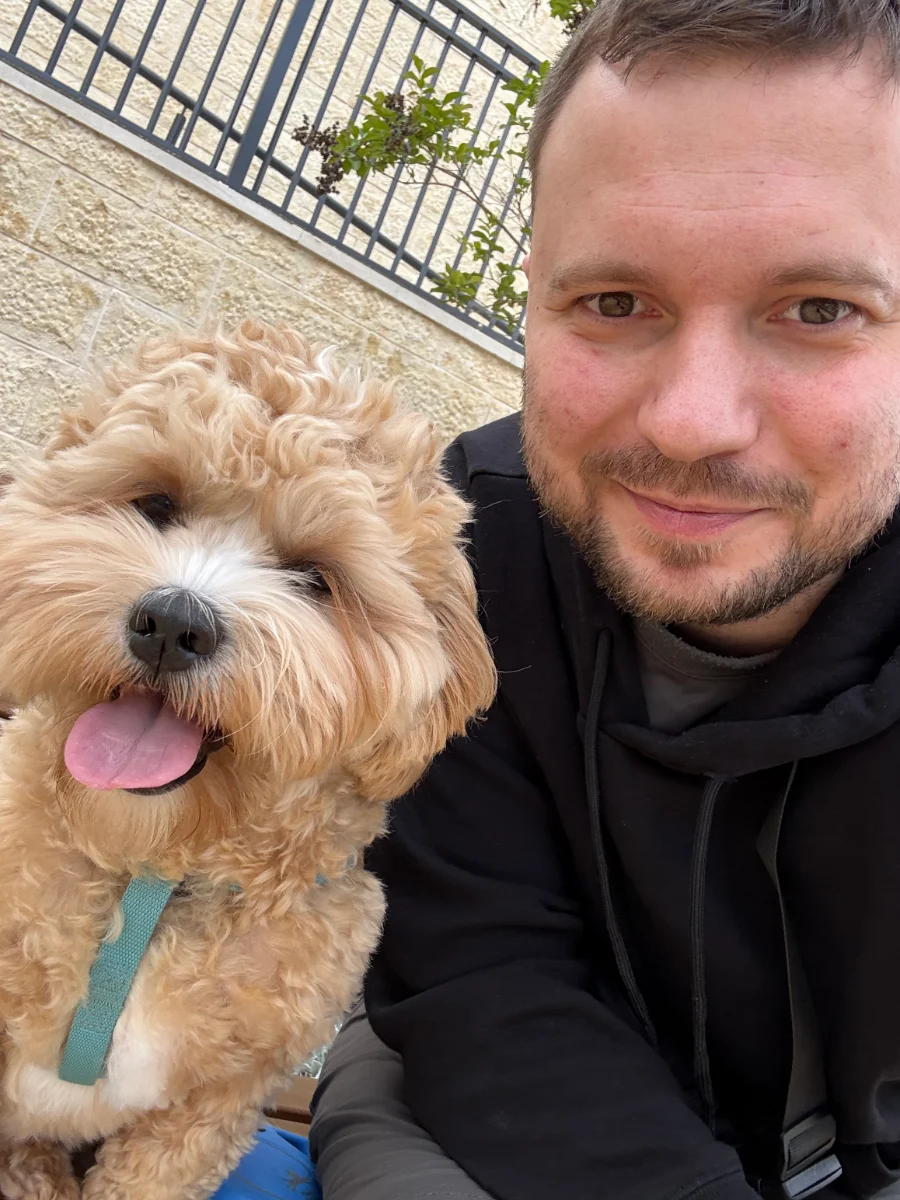
Gleb and his dog
The supervisor.
Paris at night
Paris, late, with my favourite person.

YouTube · @lobowskiii

A blog about product design.

A blog about product and UX/UI design — creative approaches to working in a digital world.

Latest video

Latest video — watch on YouTube

More episodes on the channel. Open the channel

Living in Israel, designing products, painting tiny space marines and occasionally talking about design on YouTube. If you’ve made it this far, we should probably say hello.

Let’s Get in Touch

{{ cs.title }}

{{ cs.title }}

{{ cs.lead }} {{ cs.intro }}

{{ row.label }}

{{ row.value }}

{{ cs.title }}

Overview

{{ cs.statement }}

{{ cs.body }}

{{ sec.meta }}

{{ sec.label }}

{{ sec.label }}

{{ para }}

Legacy depth is a constraint, not debt

Every field and toggle in the old tool maps to a real panel capability, so nothing could simply be deleted. Keeping the full feature set forced the structure to do the work — flows instead of pages, progressive steps instead of endless forms.

A markup pass beats a redesign

Annotating the pre-final build screen by screen — duplicate labels, inconsistent controls, dead space, wasted sidebar — caught more real problems than another visual direction would have. The final build is that list, resolved.

{{ card.title }}

{{ card.text }}

{{ ins.n }}

{{ ins.title }}

{{ ins.text }}

{{ m.alt }}
{{ ps.alt }}
{{ m.tag }}
{{ m.caption }}
{{ sec.figmaCaption }} Open in Figma
Click to interact
Interactive prototype of the hardware screen — tabs, filters, device rows and live events behave as in the product. Open full size
{{ g.name }}

{{ g.name }}

{{ gp }}

{{ g.ovAlt }}
{{ g.ovCaption }}
{{ m.alt }}
{{ m.caption }}

{{ op }}

{{ st.v }}

{{ st.l }}